Need fire damage restoration in Esther Short, Vancouver, WA 98660? A fire can affect much more than the area where flames were visible. Smoke may travel into adjoining rooms, hallways, upper floors, and ventilation pathways, while soot can settle on walls, ceilings, cabinets, furniture, and personal belongings. Water used to extinguish the fire can also affect flooring, drywall, insulation, and concealed spaces. A careful assessment helps identify which areas need cleaning, drying, repair, or replacement.
Esther Short is part of downtown Vancouver, near Esther Short Park, W 4th Street, Columbia Street, and the Vancouver Waterfront. Properties in this area can include older buildings, mixed-use spaces, apartments, and ground-floor businesses. Because buildings differ in layout and materials, restoration decisions should be based on the actual damage at the property, not assumptions about the age or type of building. After fire officials confirm that it is safe to enter, the affected areas can be documented and checked for visible burning, smoke residue, and moisture.
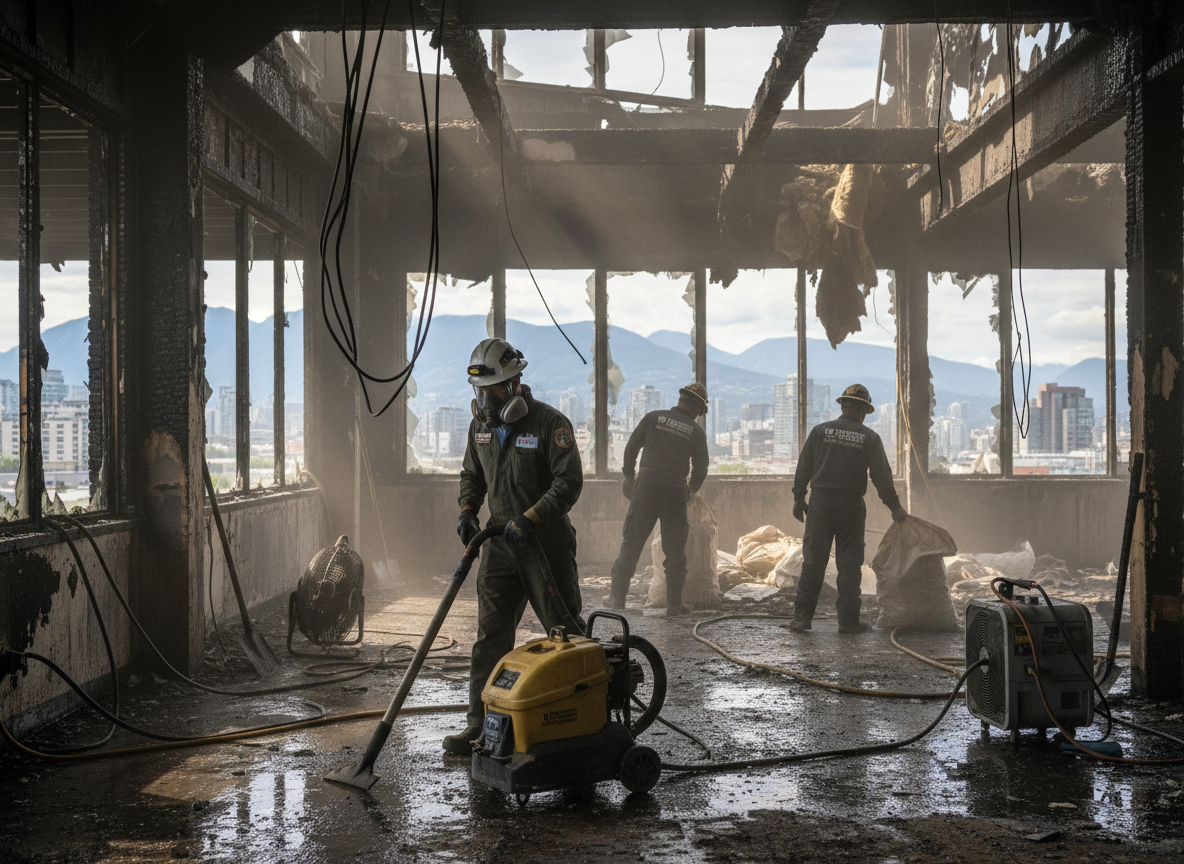
Fire cleanup may include removing damaged debris, identifying surfaces that can be cleaned, and separating materials that may need replacement. Soot should be handled carefully because the wrong cleaning method can smear residue or push it further into porous surfaces. Different materials may require different approaches, particularly where painted walls, plaster, wood trim, stone, or other finishes are involved. Learn more about our fire damage cleanup service and the steps involved in clearing fire-related residue.
Smoke can move beyond the room where a fire began. Odor and fine residue may affect curtains, upholstery, stored items, closets, and connected rooms, even where there is little visible charring. The assessment should consider how smoke moved through the property and whether ventilation pathways or contents also need attention. Our smoke damage restoration service explains the work that may be needed when smoke residue or odor affects areas outside the main fire zone.
Soot may cling to surfaces and contents, and some residues can be difficult to remove without damaging the material underneath. Avoid dry-brushing or wiping affected surfaces at random, especially if you are unsure what type of residue is present. A suitable cleaning approach depends on the surface, the extent of contamination, and whether the material can be restored. Find out more about soot removal when walls, ceilings, fixtures, or belongings have been affected.
Fire suppression water is another part of the recovery process. Water can seep under flooring, soak drywall, collect in lower-level spaces, or remain in concealed cavities after visible puddles have been removed. Moisture checks help determine whether drying is needed before repairs begin. If building materials have been burned, warped, or otherwise damaged, the repair scope should be based on a documented inspection. Our fire damage repair service covers repair needs that may follow the initial cleanup and assessment.
For properties around Esther Short Park and downtown streets, planning the work can also mean considering entrances, parking, shared corridors, and nearby tenants. In mixed-use buildings, the affected unit or business area should be assessed separately from spaces that may not have been exposed. Work should not interfere with fire officials' instructions or access restrictions. Any historic or delicate finishes should be identified before cleaning begins so the restoration approach can take their condition into account.
If a fire has affected your Esther Short property, follow instructions from the fire department and do not re-enter until authorities say it is safe. Avoid damaged wiring, unstable ceilings, and areas with structural concerns. Do not switch on affected electrical equipment or attempt extensive soot cleaning before the damage has been assessed. When it is safe, photographs and a list of affected rooms and belongings can help you keep track of the damage and discuss the scope of work with your insurance provider.
Helpful information to gather before an assessment includes:
- The room or area where the fire started, if known.
- Which rooms have visible soot, smoke odor, or heat damage.
- Whether firefighting water reached floors, walls, or lower-level areas.
- Any concerns about damaged wiring, ceilings, windows, or doors.
- Photos, receipts, and documents that can be collected safely.
These details can help guide the inspection. The recommended work will depend on the conditions found at the property, and not every fire requires the same combination of cleaning, drying, and repair.
Around Esther Short
We regularly work near:
- 📍Esther Short Park
- 📍W 4th Street
- 📍Columbia Street
- 📍Vancouver Waterfront
- 📍Kiggins Theatre
Fire Damage Restoration Vancouver WA in Esther Short — Local Notes
- •Buildings near Esther Short Park may have a mix of older finishes and newer renovations. Identify delicate plaster, woodwork, and other surfaces before choosing a cleaning method.
- •Smoke can travel through adjoining rooms, stairwells, ceiling spaces, and ventilation pathways. The assessment should consider areas beyond the room where the fire started.
- •Downtown parking, shared entrances, and narrow access points can affect where equipment is placed. Plan staging so it does not block building access or emergency routes.
- •In mixed-use buildings, smoke or water may affect residential units and commercial spaces differently. Document the affected areas separately and follow any building access restrictions.
- •If suppression water reached flooring, drywall, insulation, or concealed spaces, moisture checks can help determine whether drying should happen before repair work.