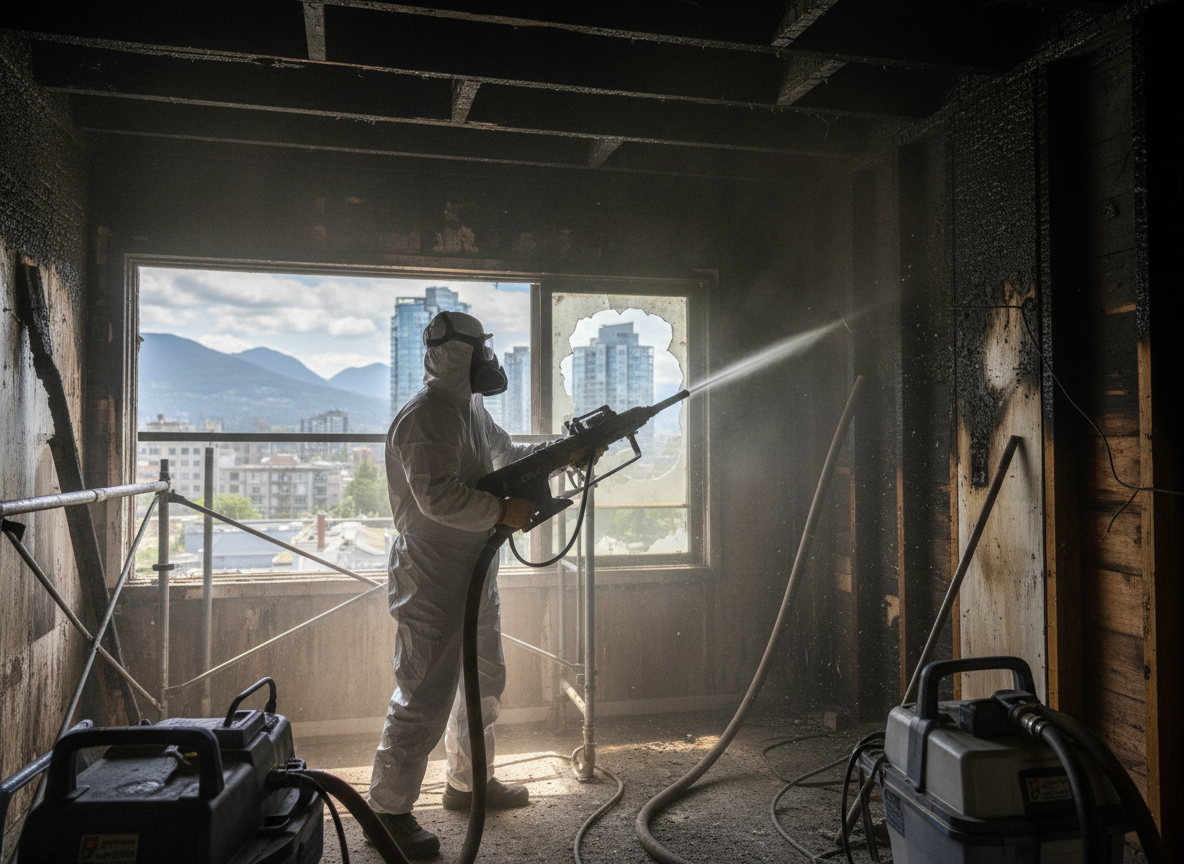
Smoke from structure fires moves quickly through the cavities and balloon framing common in Vancouver homes built before 1970, especially those near Fort Vancouver National Historic Site and in Downtown Vancouver. The region's mild wet winters trap moisture in walls and attics, turning acidic soot into a corrosive film that etches glass, metal, and finished wood if not neutralized within days. Warm dry summers accelerate drying but also make fine soot airborne again during cleanup, requiring sealed containment before any demolition or HEPA vacuuming begins.
Properties in Uptown Village and Felida often have lath-and-plaster or early drywall that absorbs smoke odors differently than newer builds in Orchards. We test pH levels on surfaces before applying alkaline cleaners and run negative-air machines to prevent cross-contamination into unaffected rooms. HVAC systems in Clark County homes frequently pull smoke into ductwork; failing to clean coils and registers leaves persistent odors that surface weeks later when furnaces cycle on during cooler months.
Nearby Portland and Camas winds can push smoke deeper into homes during regional fire events, so we prioritize sealing exterior openings early. Contents like books, electronics, and clothing are inventoried and moved to controlled drying rooms rather than left on-site where humidity fluctuates. Every job ends with post-cleaning air sampling to confirm particulate levels have returned to normal before homeowners reoccupy.
Technician insight
In Vancouver the thing that catches most people out with Smoke Damage Restoration is how smoke travels through the open wall cavities in pre-war homes around Fort Vancouver and Downtown; our wet winters keep the soot damp and acidic longer, so skipping a full drying step before cleaning just locks the odor back into the plaster and framing.
Kitchen Fire Smoke Migration in Hazel Dell
A kitchen fire sent smoke through ceiling joists into bedrooms of a 1960s Hazel Dell house. We found heavy soot on HVAC coils and acidic residue on wood trim that had stayed damp from recent winter rains. After sealing the system, cleaning all cavities, and running neutralization for 48 hours, the home passed air testing and the family moved back in without lingering smells.
Smoke Damage Restoration Services We Offer
✓HVAC Soot Removal
Full duct and coil cleaning to stop smoke odors from recirculating through Vancouver WA homes after fire events.
✓Structural Soot Cleaning
pH-balanced cleaning of walls, ceilings, and trim in older Clark County houses where smoke has penetrated porous surfaces.
✓Odor Neutralization Treatments
Hydroxyl and ozone treatments combined with thermal fogging to eliminate embedded smoke smells in Uptown Village and Hazel Dell properties.
✓Contents Cleaning and Restoration
Item-by-item cleaning of clothing, furniture, and documents for homes in Orchards and Felida affected by drifting smoke.
✓Air Quality Testing
Post-clean particulate and VOC testing to verify safe re-entry in Downtown Vancouver and Waterfront Park area homes.
How it works
- 1
Initial Assessment
Inspect all affected rooms, test surfaces for pH, and map smoke migration through the home's framing and HVAC.
- 2
Containment and Protection
Set up negative air and plastic barriers to keep soot from spreading into clean zones during work.
- 3
Cleaning and Neutralization
Remove soot with appropriate cleaners, then apply odor counteractants and run air scrubbers.
- 4
Final Verification
Conduct air sampling and visual inspection before returning contents and releasing the property.
Pricing
Cost depends on square footage affected, depth of smoke penetration, and whether HVAC or contents require separate handling; we provide upfront written quotes after inspection.