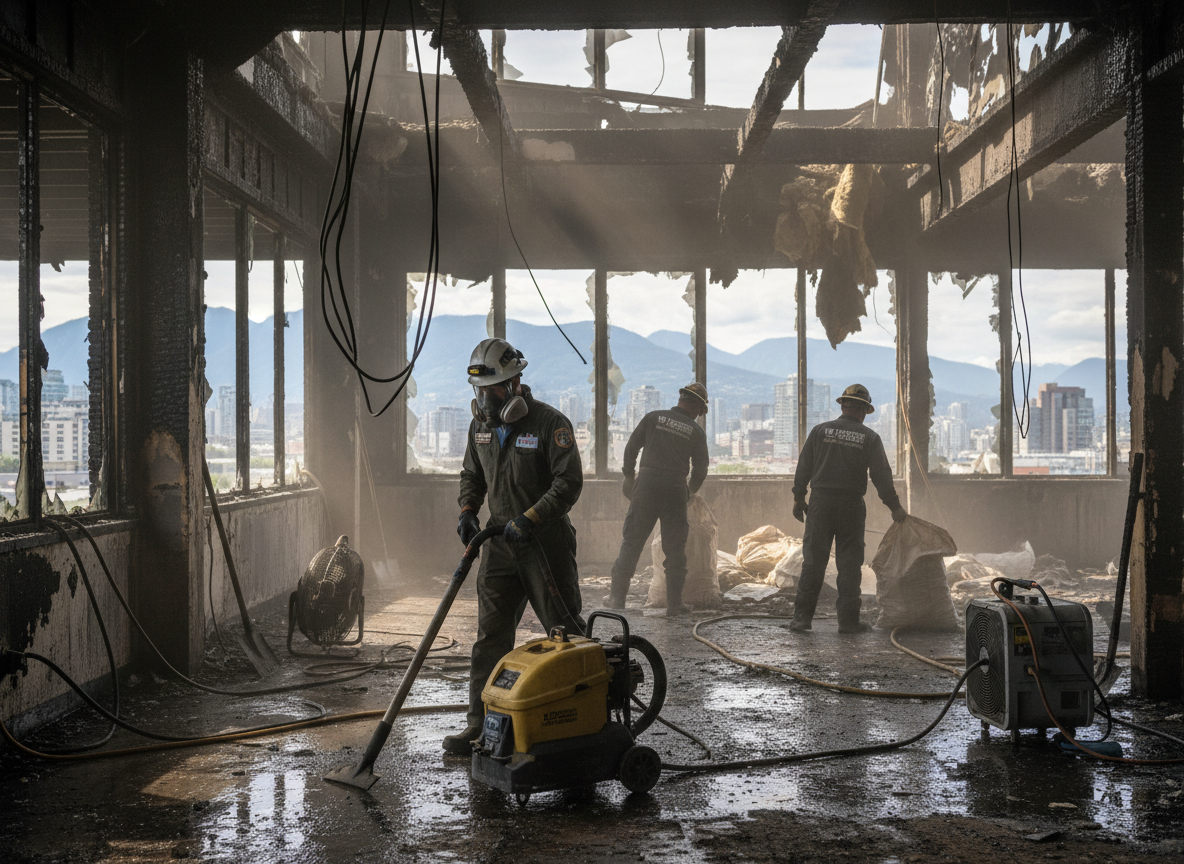
Greater Brush Prairie sits on the northern edge of Vancouver with a mix of 1970s to 2000s single-family homes on one- to five-acre lots. Dry summers turn roadside grass and blackberry thickets into fast fuel, so when a kitchen fire or electrical fault starts, crews from 215 W 4th St roll north on I-205 and 119th to stop extension before it reaches neighboring properties. Wet winters that follow mean any water used during suppression can sit in crawl spaces and under pier-and-beam floors, leading to hidden mold if drying is delayed.
Access roads such as NE 10th Avenue and 119th Street narrow quickly past the high school, so equipment staging often happens in driveways rather than on the street. Older septic systems and wells common on these parcels require extra containment during debris removal to avoid Clark County code issues. Homeowners in the Hockinson School District area call for both full-structure losses and smaller outbuilding fires that threaten the main house.
The same mild wet winters that keep summers fire-prone also mean plywood and drywall left damp after suppression absorb water for weeks. Technicians therefore focus on negative-pressure drying and targeted demolition along load-bearing walls typical of the ranch and split-level stock found here.
Around Greater Brush Prairie
We regularly work near:
- 📍Hockinson High School
- 📍Brush Prairie Park
- 📍NE 119th Street
- 📍Hockinson Middle School
- 📍NE 10th Avenue
- 📍Brush Prairie Baptist Church
Fire Damage Restoration Vancouver WA in Greater Brush Prairie — Local Notes
- •Larger lots and gravel driveways in Greater Brush Prairie slow heavy equipment arrival, so initial assessment often starts with smaller response vehicles staged at the end of NE 119th or 10th Avenue.
- •Dry summers increase risk of vegetation fires jumping from roadside brush to wood-sided homes built in the 1980s and 1990s with limited defensible space.
- •Pier-and-beam foundations common on acreage properties trap suppression water, requiring longer drying times and moisture mapping under floors before any reconstruction begins.
- •Septic systems and wells on many parcels mean debris-hauling routes must avoid drain fields to stay within Clark County environmental rules.