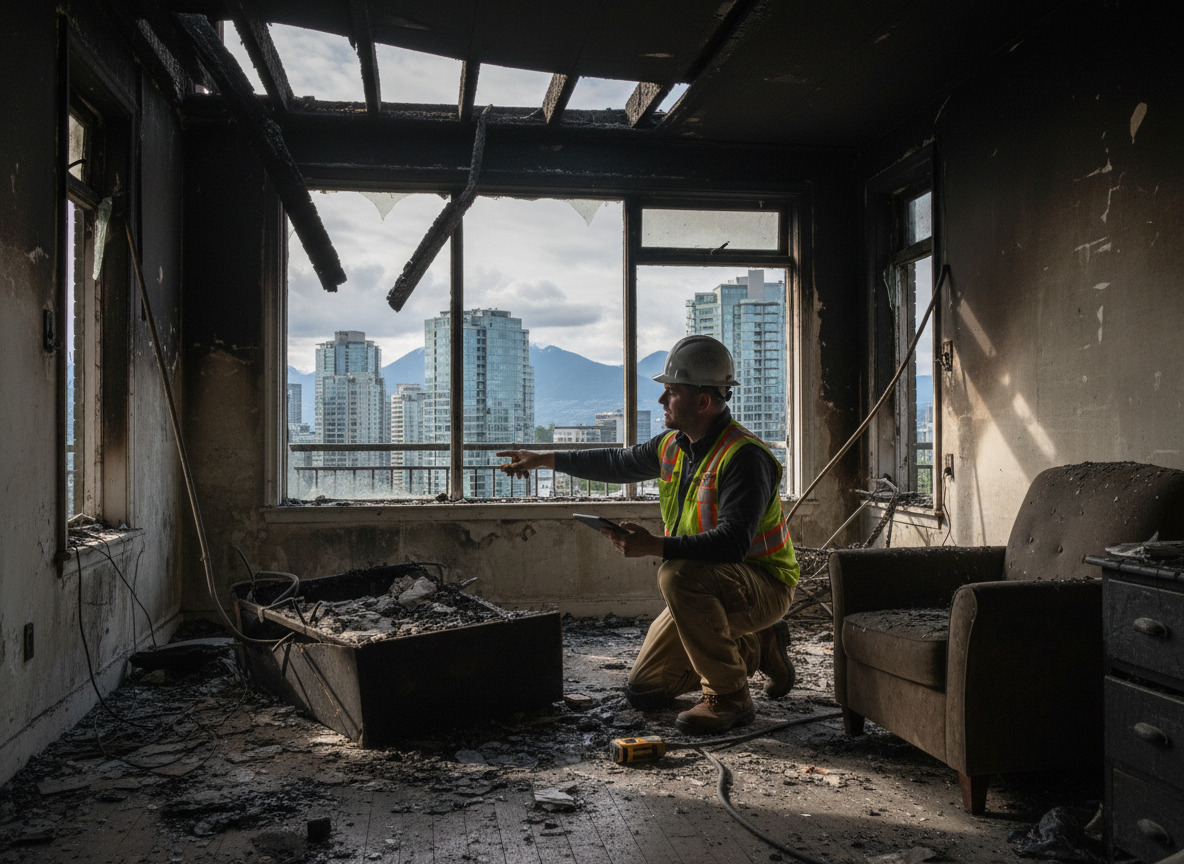
North Salmon Creek sits along the northern edge of Vancouver with single-family homes built mostly from the 1980s onward on larger lots that back into wooded draws. When a kitchen fire or electrical issue spreads smoke through these split-level and ranch houses, crews from our downtown shop at 215 W 4th St can reach the neighborhood in under twenty minutes via I-5 or 119th Street. Dry summer months leave pine needles and deck debris ready to carry embers, so we focus on attic and crawlspace cleaning before the first fall rains arrive.
Many properties here sit on slopes that drain toward Salmon Creek, so water used during suppression can travel under foundations and into finished basements. Our process includes checking slab edges and French drains common in the 98686 subdivisions before we start dehumidification. Warm days and cool nights create heavy condensation inside the homes, which is why we run air movers and moisture meters on every visit until readings match pre-loss conditions.
Residents in North Salmon Creek often share driveways or park on narrow cul-de-sacs, so we stage equipment at the street and carry tools to the structure. This keeps traffic moving on NE 139th and 119th while we remove charred insulation and treat smoke odor on cedar siding that is common on homes bordering the park.
Around North Salmon Creek
We regularly work near:
- 📍Salmon Creek Regional Park
- 📍Washington State University Vancouver
- 📍Klineline Pond
- 📍NE 119th Street
- 📍Salmon Creek Elementary School
- 📍Whipple Creek Regional Park
Fire Damage Restoration Vancouver WA in North Salmon Creek — Local Notes
- •Wooded lots around Salmon Creek Regional Park mean crews check for hidden ember pockets in gutters and under decks during every summer call.
- •Sloped driveways and shared access points on 119th Street require smaller equipment staging so fire trucks and residents can still pass.
- •Cool nights after warm days increase condensation inside attics, so we extend drying times on homes built into the hillside near Whipple Creek.
- •Many 1980s-1990s homes here have finished daylight basements that collect suppression water; we always pull baseboards and check slab moisture before sealing.