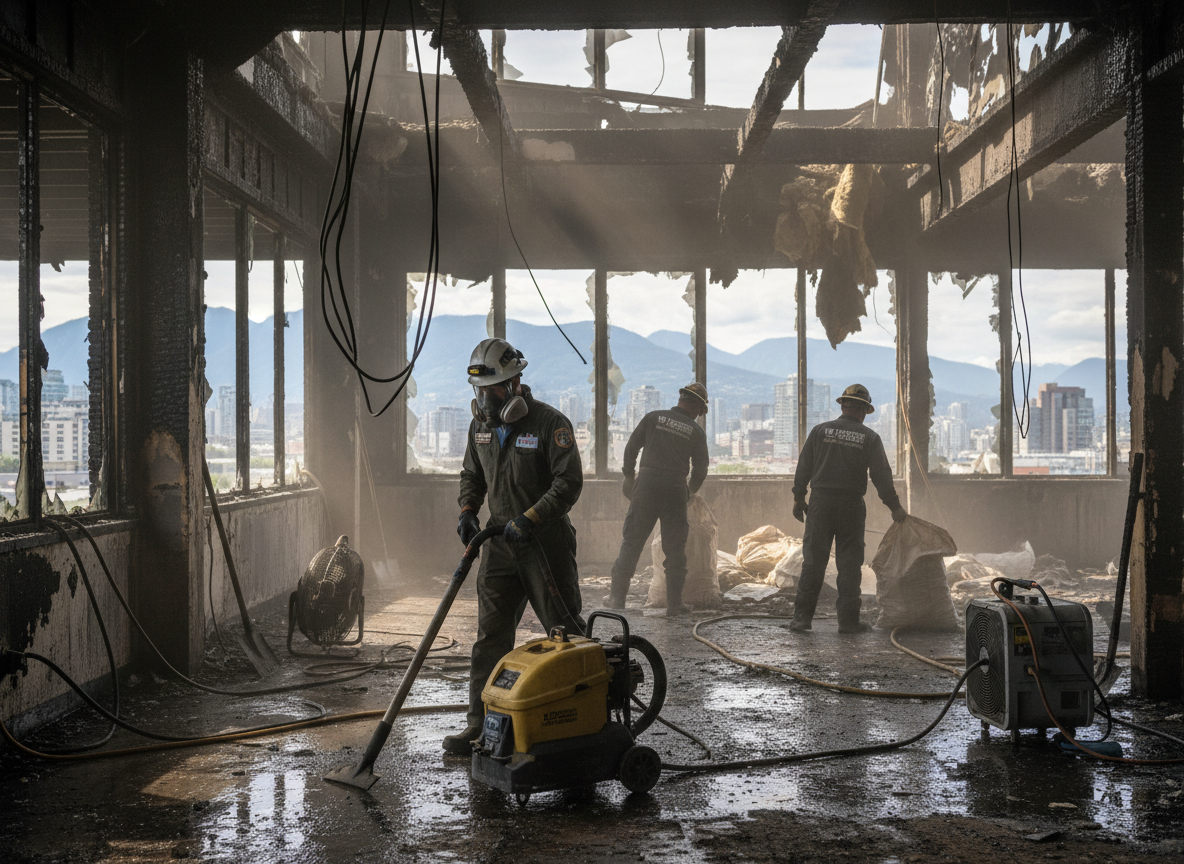
Riveridge sits on the east side of Vancouver along the Columbia River, where homes from the 1960s and 1970s line streets such as NE 18th and Riveridge Drive. Crews based at 215 W 4th St reach the neighborhood in under fifteen minutes via Fourth Plain or I-205. After a fire, the same mild wet winters that keep summers dry also pull moisture into soot-covered attics and crawl spaces, turning light smoke damage into hidden mold if drying is delayed.
Many Riveridge properties back up to steeper lots that drain toward the river, so fire-suppression water often pools against foundations. Technicians extract standing water first, then use air movers suited to the tight access between neighboring fences. Nearby Camas and Washougal residents call the same downtown Vancouver crew when wind carries smoke across the Columbia, but Riveridge jobs stay local because of the direct bridge routes and known lot layouts.
Fire-damaged kitchens in these split-level homes frequently involve particleboard cabinets that swell quickly once wet. The crew removes only the affected sections, protects salvageable hardwood floors, and coordinates disposal at the Clark County transfer station so homeowners avoid extra trips.
Around Riveridge
We regularly work near:
- 📍Columbia River waterfront access
- 📍NE 18th Street
- 📍Lincoln Elementary School area
- 📍Riveridge Drive
Fire Damage Restoration Vancouver WA in Riveridge — Local Notes
- •Wet winters pull river humidity into soot layers on insulation, requiring longer drying times than in drier east county areas.
- •Narrow driveways and shared fences in Riveridge limit equipment placement, so smaller portable extractors are used instead of large truck mounts.
- •Many homes sit on sloped lots that channel suppression water toward the Columbia, creating hidden moisture pockets under slabs.
- •Older cedar siding common along NE 162nd absorbs smoke odor faster than newer vinyl, demanding extra time on odor neutralization.