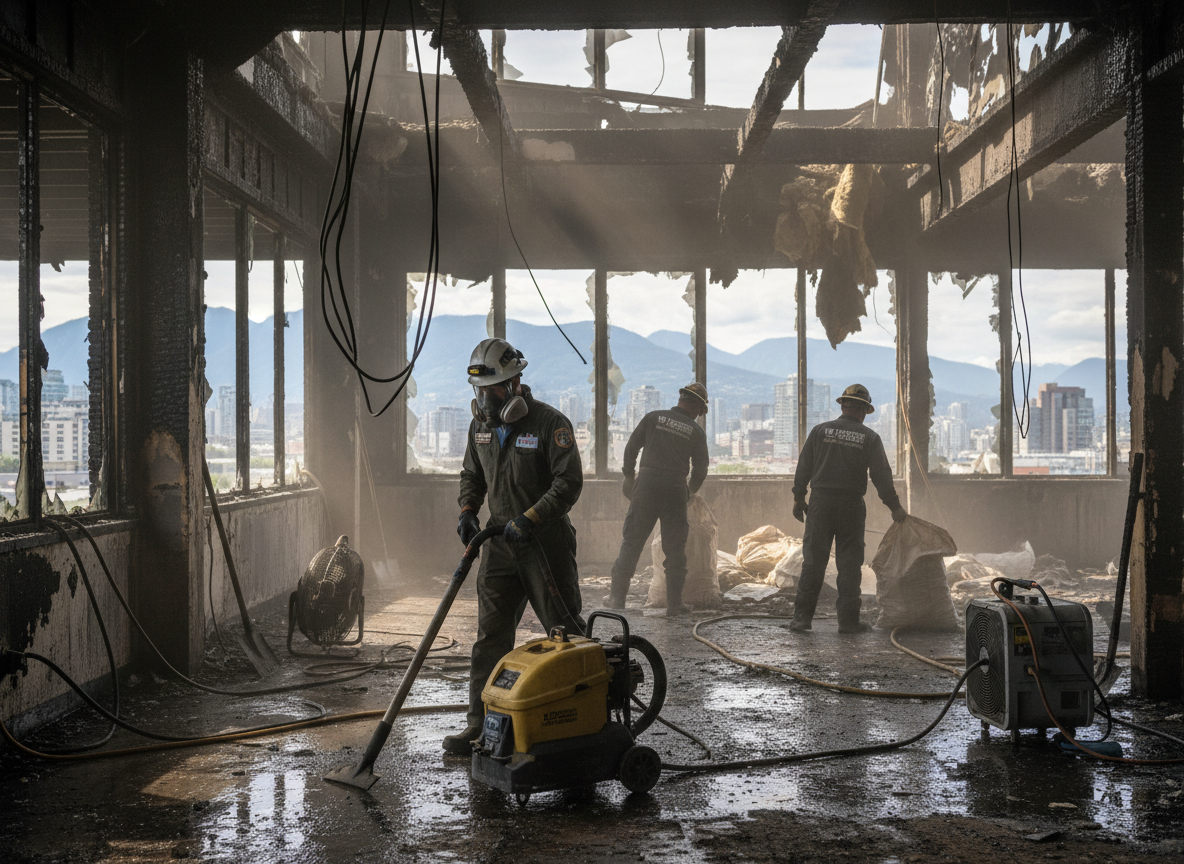
Commercial buildings in Downtown Vancouver and older stock near Fort Vancouver National Historic Site often feature brick, plaster, and timber construction that traps soot deep into cavities. Warm dry summers accelerate smoke penetration through HVAC systems while mild wet winters turn suppression water into hidden moisture pockets that trigger mold within days. Crews must isolate zones quickly to protect neighboring tenants in multi-unit Uptown Village properties and prevent cross-contamination to adjacent retail spaces.
Clark County commercial jobs frequently involve concrete tilt-up warehouses in Orchards and Felida where fire travels along roof decks and leaves alkaline residue that corrodes metal decking. Water used during suppression soaks into slab joints and migrates under fixtures, requiring targeted moisture mapping before any reconstruction begins. Failure to address this migration leads to recurring odor complaints once tenants return.
Restoration teams coordinate with local permitting offices in Vancouver when structural members are compromised, especially on buildings near Waterfront Park where seismic upgrades may be triggered. Content removal from offices in Camas and Washougal demands chain-of-custody logging because many businesses store sensitive records that cannot be exposed to further smoke or moisture damage.
Seasonal wind patterns from the Columbia River corridor can carry embers across Hazel Dell commercial strips, creating multiple ignition points that complicate origin determination. Proper documentation of each affected tenant space protects owners from disputes when insurance carriers review claims for shared-wall properties.
Technician insight
In Vancouver the thing that catches most people out with Commercial Fire Damage Restoration is how quickly suppression water migrates under concrete slabs in older Downtown buildings once the mild wet winters arrive; if you do not chase it into the joints right away the odor returns the first time humidity spikes.
Retail Strip Fire In Uptown Village
A fire started in the kitchen of a restaurant in an Uptown Village strip center and spread soot through the shared HVAC into three neighboring retail units. Water from suppression soaked into the slab and migrated under adjacent flooring. Crews isolated each space, extracted moisture from the joints, cleaned all ductwork, and returned the complex to tenants within three weeks with no recurring odor complaints.
Commercial Fire Damage Restoration Services We Offer
✓Commercial Soot and Residue Removal
Removes alkaline soot from HVAC, ceilings, and wall cavities in older Vancouver commercial structures before it embeds permanently.
✓Structural Drying After Fire Suppression
Extracts trapped water from slabs and roof decks in Clark County buildings before wet winters create secondary mold growth.
✓Commercial Content Cleaning and Inventory
Cleans, logs, and packs out office equipment and records from sites in Downtown Vancouver and Uptown Village for off-site processing.
✓Odor Neutralization for Retail Spaces
Applies targeted treatments to eliminate smoke odor in retail and restaurant spaces near Pearson Air Museum and Waterfront Park.
✓Tenant Space Containment and Protection
Installs barriers to isolate damaged commercial units from unaffected neighbors in multi-tenant Hazel Dell and Felida properties.
How it works
- 1
Initial Site Assessment
Inspect all affected commercial areas, document soot migration paths, and test moisture levels in concrete and wall assemblies.
- 2
Zone Containment
Set up negative air and physical barriers to protect adjacent businesses in shared-wall Vancouver buildings.
- 3
Soot Removal And Cleaning
Clean surfaces, HVAC systems, and contents using methods appropriate for brick, plaster, and metal found in local commercial stock.
- 4
Drying And Monitoring
Apply drying equipment and track moisture daily until readings meet restoration standards before reconstruction.
- 5
Final Clearance And Handover
Conduct odor and air quality checks with tenants present and provide documentation for insurance.
Pricing
Pricing depends on building size, extent of soot migration, and number of affected tenant spaces.