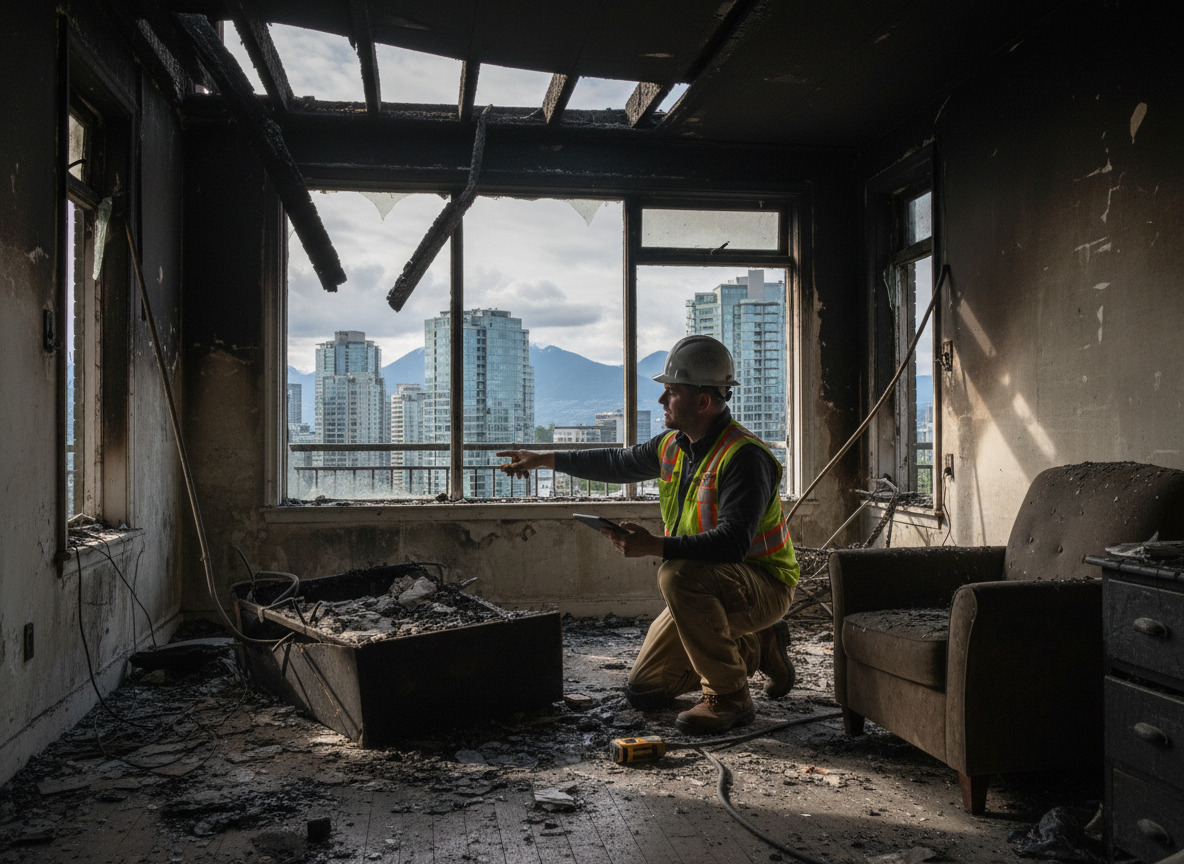
Vancouver's older housing stock in neighborhoods like Felida and Uptown Village often features balloon framing and plaster walls that allow smoke to travel far beyond the fire origin. Assessment must trace these paths carefully because mild wet winters can trap moisture in cavities and turn residual smoke into corrosive acids that damage wiring and HVAC systems. Properties near Fort Vancouver National Historic Site frequently include historic construction details that require non-destructive testing methods to avoid further harm during evaluation.
Fire suppression water in Clark County homes interacts differently with local soils and foundations, especially in Hazel Dell where clay-heavy ground slows drainage. Assessment includes checking crawl spaces and attics for hidden saturation that can lead to mold within days of a warm dry summer following the incident. Nearby Portland and Camas homes share similar challenges but Vancouver's proximity to the Columbia River adds humidity considerations that affect drying timelines and material salvage decisions.
Pearson Air Museum area properties and Waterfront Park residences often sit on varied terrain that influences smoke plume behavior and water runoff during incidents. Thorough assessment documents every affected layer, from insulation to subflooring, to support accurate restoration planning. Edge cases include electrical systems compromised by conductive soot in older Orchards homes, where aluminum wiring requires specialized detection to prevent future hazards.
Technician insight
In Vancouver the thing that catches most people out with Fire Damage Assessment is how quickly suppression water soaks into older crawl spaces during our mild wet winters, especially in Hazel Dell homes built before 1960 where poor drainage turns a contained fire into widespread hidden damage that only shows up weeks later.
Orchards Home Post-Fire Evaluation
A kitchen fire in an Orchards residence spread smoke through HVAC ducts and left suppression water in the basement. Assessment revealed saturated insulation and conductive soot on aluminum wiring. The report mapped every affected area so restoration could target the real sources without unnecessary demolition.
Fire Damage Assessment Services We Offer
✓Structural Integrity Evaluation
Examines load-bearing elements in Vancouver homes for fire weakening, focusing on common balloon framing found in Hazel Dell and Felida properties.
✓Smoke Residue Mapping
Identifies soot penetration through walls and ducts, critical after fires in Uptown Village where older plaster allows widespread migration.
✓Suppression Water Assessment
Traces water from firefighting efforts through foundations and attics, accounting for Clark County's wet winters that prolong moisture retention.
✓Hazardous Material Identification
Detects asbestos or lead in pre-1970s Vancouver construction during assessment to guide safe handling before cleanup begins.
✓Insurance Documentation Support
Produces detailed reports with photos and measurements for claims on properties near Waterfront Park and Fort Vancouver National Historic Site.
How it works
- 1
Site Walkthrough
Inspect all accessible areas of the Vancouver property to note visible char, smoke patterns, and water intrusion points.
- 2
Testing and Sampling
Use moisture meters, air quality tools, and material probes on affected zones in neighborhoods like Orchards or Downtown Vancouver.
- 3
Hidden Damage Review
Check cavities, attics, and crawl spaces for issues common in Clark County homes after suppression efforts.
- 4
Report and Recommendations
Compile findings into a clear document outlining scope and next steps for restoration.
Pricing
Assessment fees depend on property size, number of affected levels, and testing needs; upfront quotes provided before work starts.