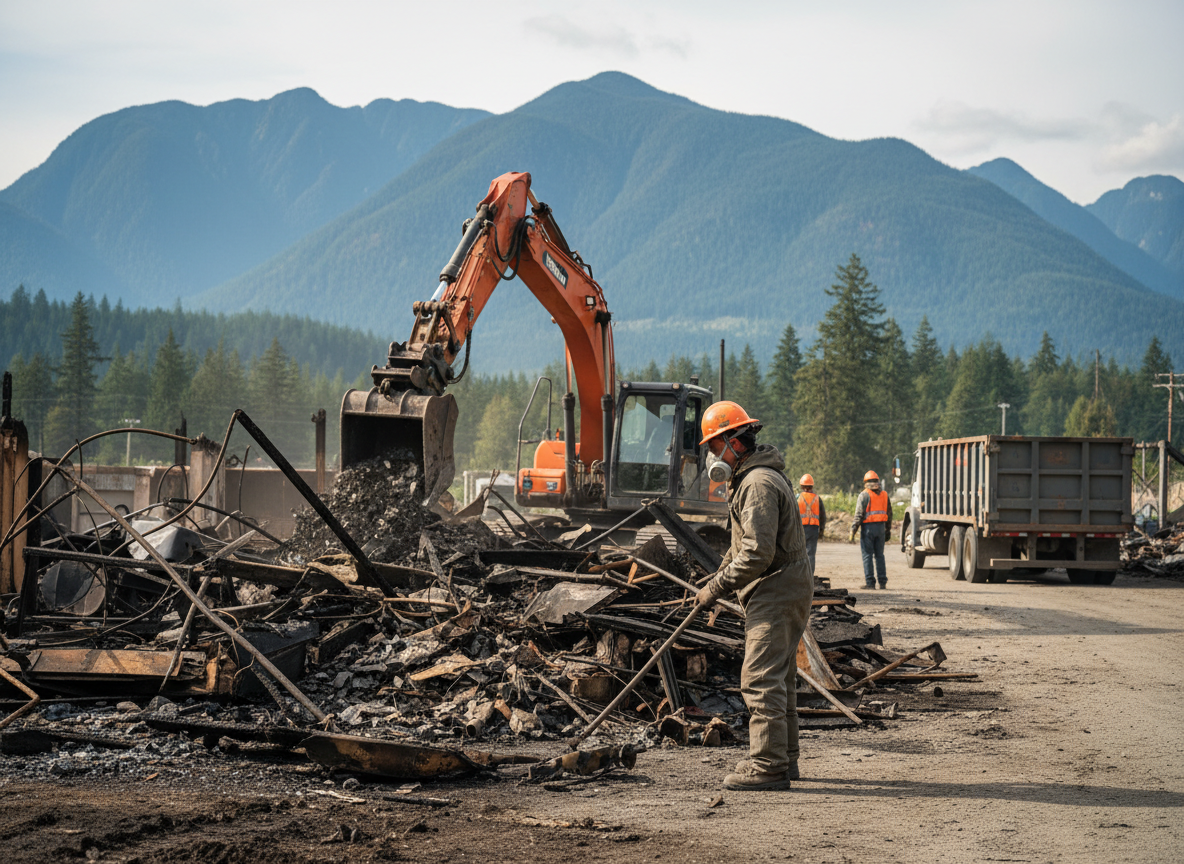
Fire debris removal in Vancouver requires careful handling of ash, charred wood and contaminated materials that spread through older homes common in neighborhoods like Orchards and Felida. Many houses here date back decades with wood framing and crawl spaces that trap fine particles. Wet winter rains quickly turn loose ash into a heavy sludge that can migrate into soil and affect nearby properties along the Columbia River corridor toward Camas and Washougal.
Our crews start by isolating the work zone to prevent cross-contamination into unaffected rooms or adjacent structures. We separate recyclable metals from non-combustible waste and load hazardous items for proper disposal at Clark County facilities. Warm dry summers allow faster exterior work but increase dust risk, so we use negative air machines and sealed chutes when clearing debris near Fort Vancouver National Historic Site or Waterfront Park properties.
Edge cases include multi-unit buildings in Uptown Village where shared walls require coordinated access and smoke odor that lingers in insulation. We document every load for insurance purposes and coordinate with local waste transfer stations to keep the job moving without delays. Homeowners should never attempt removal themselves because disturbed ash can re-aerosolize and create new health hazards inside living spaces.
Terrain around Pearson Air Museum and Hazel Dell often includes sloped lots that complicate equipment placement, so we stage dumpsters on level ground and use tarps to protect driveways. This methodical approach keeps the site secure and prevents secondary water damage during the frequent winter rains.
Technician insight
In Vancouver, the thing that catches most people out with Fire Debris Removal is how mild wet winters turn ash into a heavy sludge that works its way into the crawl spaces and siding of older homes in Felida and Hazel Dell. Homeowners often try to sweep it themselves and end up spreading it further before we arrive.
Hazel Dell Home After Kitchen Fire
Charred cabinets and ceiling joists dropped ash through the floor into the crawl space of a 1970s Hazel Dell house. We isolated the kitchen, removed all debris and sludge created by recent rain, then hauled everything to the county transfer station. The homeowner could start repairs without lingering particles affecting the rest of the property.
Fire Debris Removal Services We Offer
✓Ash and Soot Extraction
Removes fine ash particles and embedded soot from attics, crawl spaces and wall cavities common in older Vancouver homes.
✓Structural Debris Clearance
Safely dismantles and removes burned framing, roofing and fixtures while protecting surrounding intact areas in Clark County properties.
✓Hazardous Material Segregation
Identifies and separates asbestos, lead paint and chemical residues before transport to approved Clark County disposal sites.
✓Post Fire Site Stabilization
Secures openings, installs temporary barriers and prevents weather intrusion after debris removal in wet Vancouver winters.
✓Debris Hauling and Disposal
Loads, transports and disposes of all fire waste at licensed facilities serving Vancouver, Portland and Washougal.
How it works
- 1
Site Assessment
Walk the property to map debris locations, note structural risks and identify access points in neighborhoods like Downtown Vancouver or Uptown Village.
- 2
Containment Setup
Install plastic barriers, negative air machines and floor protection to stop ash migration into clean areas of the home.
- 3
Debris Removal
Hand sort and mechanically remove charred materials, ash and contaminated contents while documenting each step for insurance.
- 4
Final Clearance
Inspect for remaining particles, remove containment equipment and leave the site ready for restoration or reconstruction.
Pricing
Cost depends on debris volume, property access and whether hazardous materials are present. We provide upfront quotes after the initial assessment.