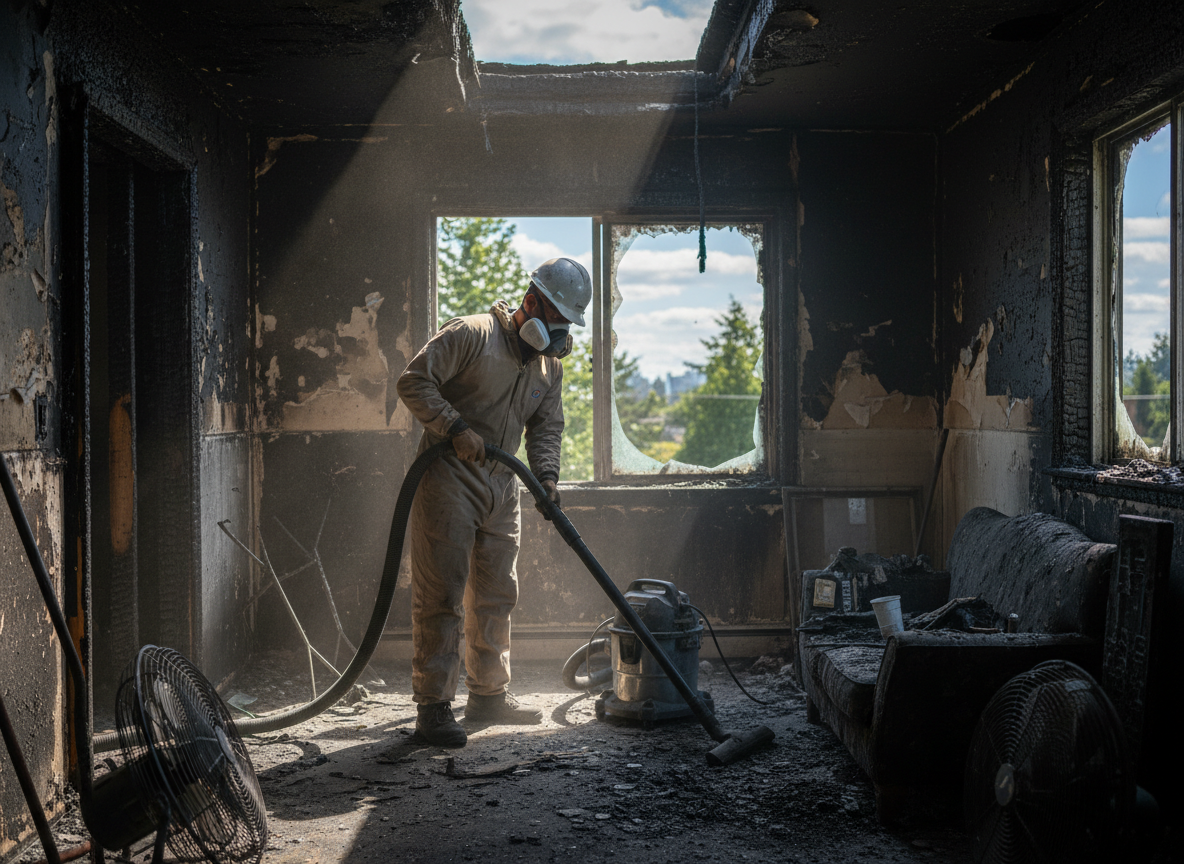
Fires in Vancouver WA homes often start in older kitchens or attics of houses built before 1970 in areas like Downtown Vancouver and Uptown Village. These structures commonly contain lath-and-plaster walls and knob-and-tube wiring that trap soot deep into cavities. After suppression, the mild wet winters typical of Clark County keep humidity high, allowing acidic smoke residues to corrode metal and etch glass if not neutralized within days. Crews must account for this moisture because summer-dry framing can absorb extra water from hoses and then hold it through the rainy season.
Firefighting water in Hazel Dell and Orchards homes frequently pools in crawl spaces above the region's clay-heavy soils, which drain slowly and promote hidden mold growth within a week. Restoration teams remove baseboards and drill weep holes to release trapped moisture before applying antimicrobial treatments rated for Pacific Northwest conditions. Content items stored in basements near Fort Vancouver National Historic Site often require separate ozone chambers because porous materials like books and upholstery retain odors longer in the area's variable humidity.
Board-up work on properties in Felida and near Waterfront Park must use tamper-resistant materials to deter theft while allowing ventilation that prevents condensation during warm dry summers. Electrical panels damaged by smoke need full replacement rather than cleaning because Clark County code requires updated grounding on any affected service. Final clearance testing includes both visual inspection and air sampling to confirm residues are below detectable levels before homeowners return.
Technician insight
In Vancouver the thing that catches most people out with Residential Fire Damage Restoration is how the wet winters keep humidity elevated long after the fire, letting soot residues stay acidic and continue damaging wiring and metal in older Downtown and Hazel Dell homes if drying is rushed.
Kitchen Fire in Hazel Dell Home
A cooking fire spread smoke through the first floor and into the crawl space of a 1960s Hazel Dell house. Inspection showed water from suppression had soaked subfloor insulation above slow-draining clay soil. Crews extracted water, treated residues, dried framing over several days and replaced insulation before rebuilding the kitchen.
Residential Fire Damage Restoration Services We Offer
✓Soot and Ash Removal
HEPA vacuuming and chemical sponges lift embedded soot from drywall, cabinets and HVAC systems common in Clark County homes without spreading particles into unaffected rooms.
✓Smoke Odor Neutralization
Thermal fogging and hydroxyl generators break down odor molecules trapped in insulation and carpet padding after fires in older Vancouver WA neighborhoods.
✓Firefighting Water Extraction
Subfloor drying and dehumidification remove standing water from suppression efforts before it migrates into crawl spaces during wet Clark County winters.
✓Structural Assessment and Repair
Engineered lumber and plaster repairs address charring and hidden damage in pre-1970 homes found in Downtown Vancouver and Orchards.
✓Content Cleaning and Restoration
Ultrasonic cleaning and ozone treatment salvage clothing, electronics and furniture affected by smoke in Uptown Village and Felida residences.
✓Emergency Board-Up and Securing
Plywood installation with ventilation panels protects fire-damaged homes near Pearson Air Museum and Waterfront Park from weather and unauthorized entry.
How it works
- 1
Initial Assessment
Technicians inspect every room, attic and crawl space to map smoke travel and water migration specific to the home's construction and the season's humidity.
- 2
Containment And Safety
Plastic barriers and negative air machines isolate affected zones while crews remove hazards such as compromised wiring or unstable ceilings.
- 3
Cleaning And Drying
Soot removal, odor treatment and targeted drying continue until moisture readings meet industry standards for the local climate.
- 4
Rebuild And Clearance
Repairs restore finishes and systems, followed by testing to confirm the home meets habitability requirements before return.
Pricing
Cost depends on square footage affected, depth of smoke penetration and whether water reached subfloors or insulation.