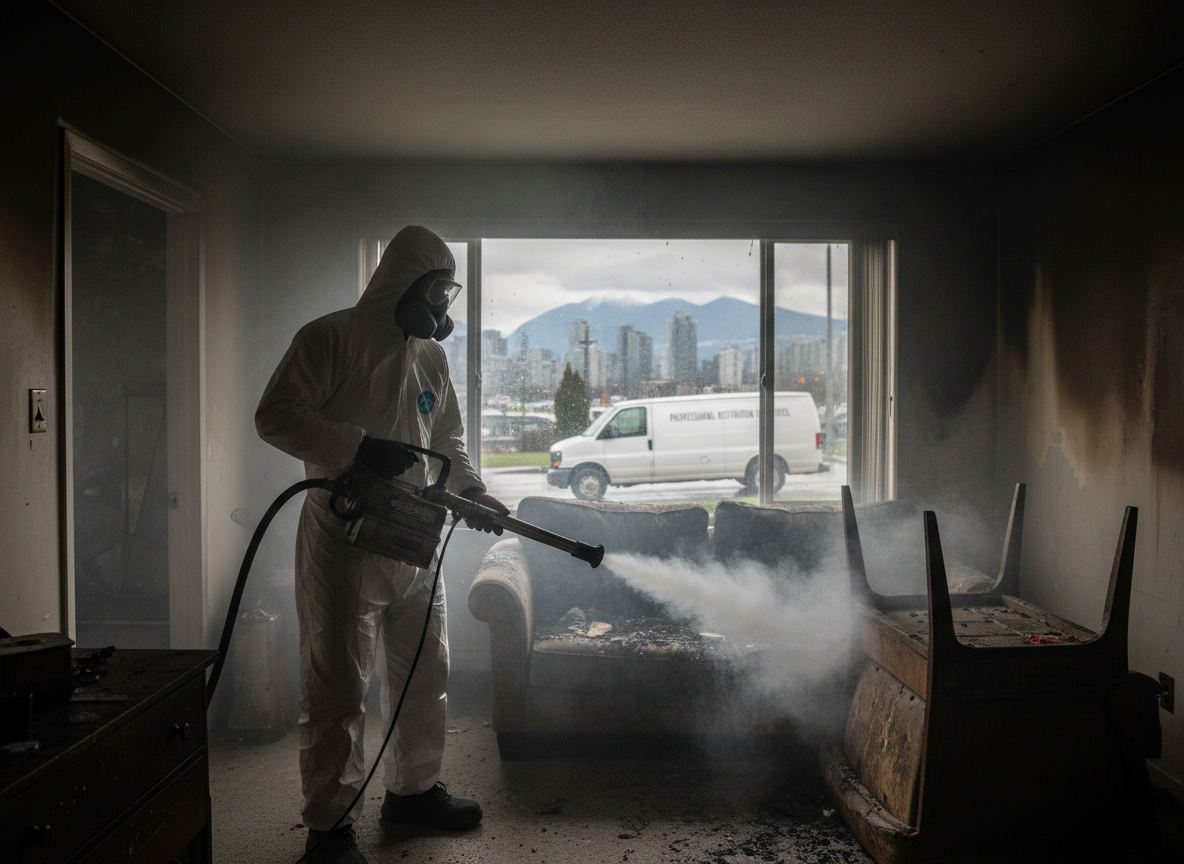
Smoke from structure fires in Clark County homes often bonds with moisture during mild wet winters, allowing odors to penetrate plaster, lathe, and insulation in older properties common around Downtown Vancouver and Uptown Village. Standard cleaning leaves residues that reactivate when humidity rises again in fall. Technicians must locate hidden pockets near fireplaces or in crawl spaces before applying treatments, because the area's warm dry summers can mask the problem until the next wet season.
Homes built before 1970 in neighborhoods like Felida and Orchards frequently have HVAC systems with metal ductwork that traps soot particles. Running the furnace after a fire circulates odors throughout the house and into adjacent rooms. Effective removal requires isolating the system, cleaning coils and registers, then treating with methods that neutralize rather than mask particles. Failure to address the ducts leads to recurring complaints from homeowners in Camas and Washougal who later notice smells returning during temperature swings.
Porous materials such as carpet padding, drywall, and wood subfloors absorb smoke differently depending on whether the fire occurred in summer or winter. In Hazel Dell properties near Pearson Air Museum, summer fires produce drier soot that settles on surfaces, while winter fires create wetter residues that wick into foundations. Sealing or replacing these materials after odor treatment prevents recontamination when residents reopen windows during the dry season.
Seasonal Considerations
Vancouver's climate cycle means smoke odor jobs scheduled in late spring must account for upcoming summer heat that can drive residues out of hidden cavities. Winter jobs require extra drying time before sealing because trapped moisture from the treatment process can create new mold risks in the region's frequent rain.
Technician insight
In Vancouver the thing that catches most people out with Smoke Odor Removal is how mild wet winters push smoke into the plaster and lathe walls of older Downtown Vancouver homes near Waterfront Park. Homeowners often run fans too soon after treatment, pulling moisture back into the cavities and reactivating the odor when summer heat arrives.
Orchards Home After Kitchen Fire
Smoke had traveled through the central air system of a 1960s house. Inspection found heavy residue inside the main trunk line. Crew isolated and cleaned the ducts, applied ozone over two days, then sealed accessible joints. Odor did not return after the furnace was restarted the following week.
Smoke Odor Removal Services We Offer
✓Ozone Treatment for Lingering Smoke
Neutralizes embedded odors in walls and fabrics of Clark County homes where wet winters have driven smoke deep into porous surfaces.
✓HVAC Duct and Register Cleaning
Removes soot from ductwork in older Vancouver homes so odors do not recirculate when furnaces restart after fire events.
✓Thermal Fogging Application
Penetrates cracks and voids in Uptown Village and Downtown Vancouver properties to reach smoke residues standard sprays miss.
✓Carpet and Upholstery Deodorization
Treats padding and fabric layers that absorb smoke during winter fires common in Hazel Dell and Orchards neighborhoods.
✓Structural Material Sealing
Applies odor-blocking primers to drywall and wood after cleaning to stop re-release during Vancouver's dry summer months.
✓Attic and Crawl Space Treatment
Addresses smoke that settles in unconditioned spaces of pre-1970 homes near Fort Vancouver National Historic Site.
How it works
- 1
Initial Inspection
Technicians examine affected rooms, HVAC, and hidden cavities in the specific Vancouver property to map smoke migration.
- 2
Source Removal
All charred debris and heavily contaminated materials are removed before any odor treatment begins.
- 3
Primary Treatment
Appropriate method such as ozone or thermal fogging is applied based on material type and season.
- 4
Ventilation and Verification
Air is exchanged and tested until no detectable smoke odor remains under normal living conditions.
Pricing
Cost depends on square footage treated, depth of smoke penetration into ducts or insulation, and whether multiple visits are required due to seasonal moisture.