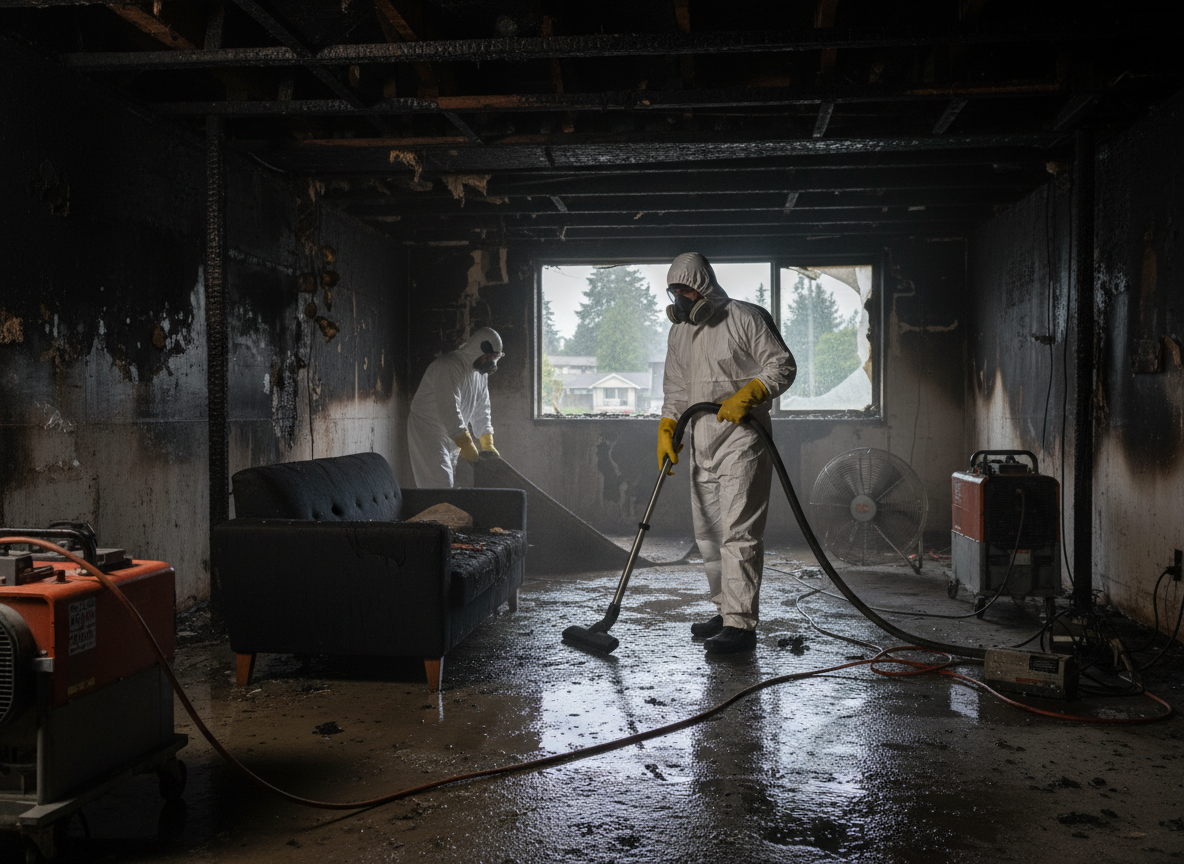
Fires in Vancouver's older housing stock, especially pre-1970 homes near Fort Vancouver National Historic Site and in Uptown Village, often involve significant water from suppression efforts. These structures frequently have plaster, lath, and balloon framing that trap moisture deep in walls and attics. Clark County's mild wet winters slow natural drying, allowing hidden saturation to reach subfloors and crawl spaces before warm dry summers arrive and accelerate mold growth. Technicians must account for this seasonal shift when planning equipment placement and monitoring.
Suppression water in single-story ranch homes common in Hazel Dell and Felida can migrate under cabinets and into HVAC returns, carrying soot that binds to wet drywall. Extraction must precede any drying to avoid driving particulates further into porous materials. Properties near Waterfront Park and Pearson Air Museum sit on flatter terrain with higher water tables, so technicians check for groundwater intrusion that compounds fire-related water loads. Failure to separate these sources leads to repeated callbacks after the initial job appears complete.
Edge cases include multi-unit buildings in Downtown Vancouver where water travels between floors through shared plumbing chases. Code requires full removal of affected insulation and verification of moisture levels below 15 percent before new materials are installed. Crews document every step for Clark County permitting when structural drying involves load-bearing elements. Work in nearby Camas and Washougal follows the same protocols but often encounters different soil drainage patterns that affect drying times.
Technician insight
In Vancouver, the thing that catches most people out with Water Damage After Fire is how the mild wet winters keep older balloon-framed homes in Hazel Dell and Orchards from drying on their own, so moisture hides in floor joists until summer heat triggers mold weeks later.
Orchards Home After Kitchen Fire
Suppression water from a kitchen fire traveled under cabinets into the crawl space of a 1960s home. We found saturation in subflooring that standard fans would have missed. Extraction and targeted drying prevented mold before the next rain cycle arrived.
Water Damage After Fire Services We Offer
✓Post-Fire Water Extraction
Removes standing water from suppression efforts in living spaces, basements, and crawl spaces before secondary damage sets in.
✓Moisture Mapping and Monitoring
Uses meters and thermal imaging to locate hidden saturation in walls and ceilings common in Vancouver's older homes.
✓Structural Drying After Fire
Deploys air movers and dehumidifiers sized for Clark County humidity swings to bring materials back to safe moisture levels.
✓Soot-Contaminated Water Cleanup
Cleans surfaces where fire residue mixes with water, preventing permanent staining on drywall, flooring, and trim.
✓Mold Prevention After Suppression
Applies antimicrobial treatments and verifies drying in wet winters to stop mold from developing in attics and wall cavities.
How it works
- 1
Initial Assessment
Technician inspects the property for water migration paths created by fire hoses and checks neighboring units in multi-family buildings.
- 2
Water Removal
Pumps and extractors remove standing water while containing soot-laden runoff to protect unaffected areas.
- 3
Drying and Monitoring
Equipment runs with daily moisture readings until levels stabilize, adjusted for Vancouver's seasonal rainfall.
- 4
Final Verification
Documentation confirms all affected materials meet drying standards before reconstruction begins.
Pricing
Cost depends on square footage affected, number of rooms, and whether hidden moisture requires wall or ceiling access.